
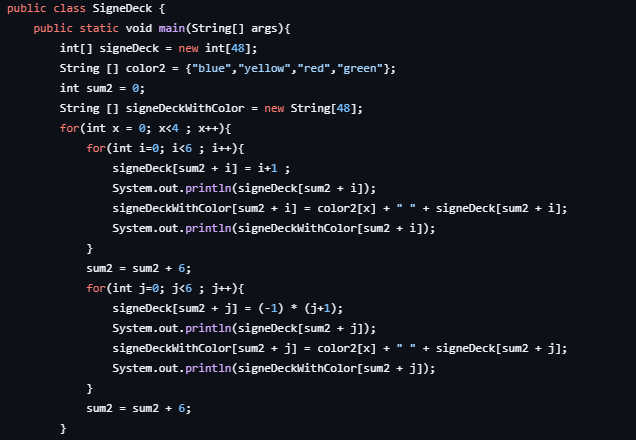
One of my first-year projects, developed in Java, was the Blue Jack project — a console application simulating a customized card game. The project aimed to implement the game mechanics of “Blue Jack”; however, it remained incomplete and served primarily as an early learning experience in object-oriented programming and console-based game design.
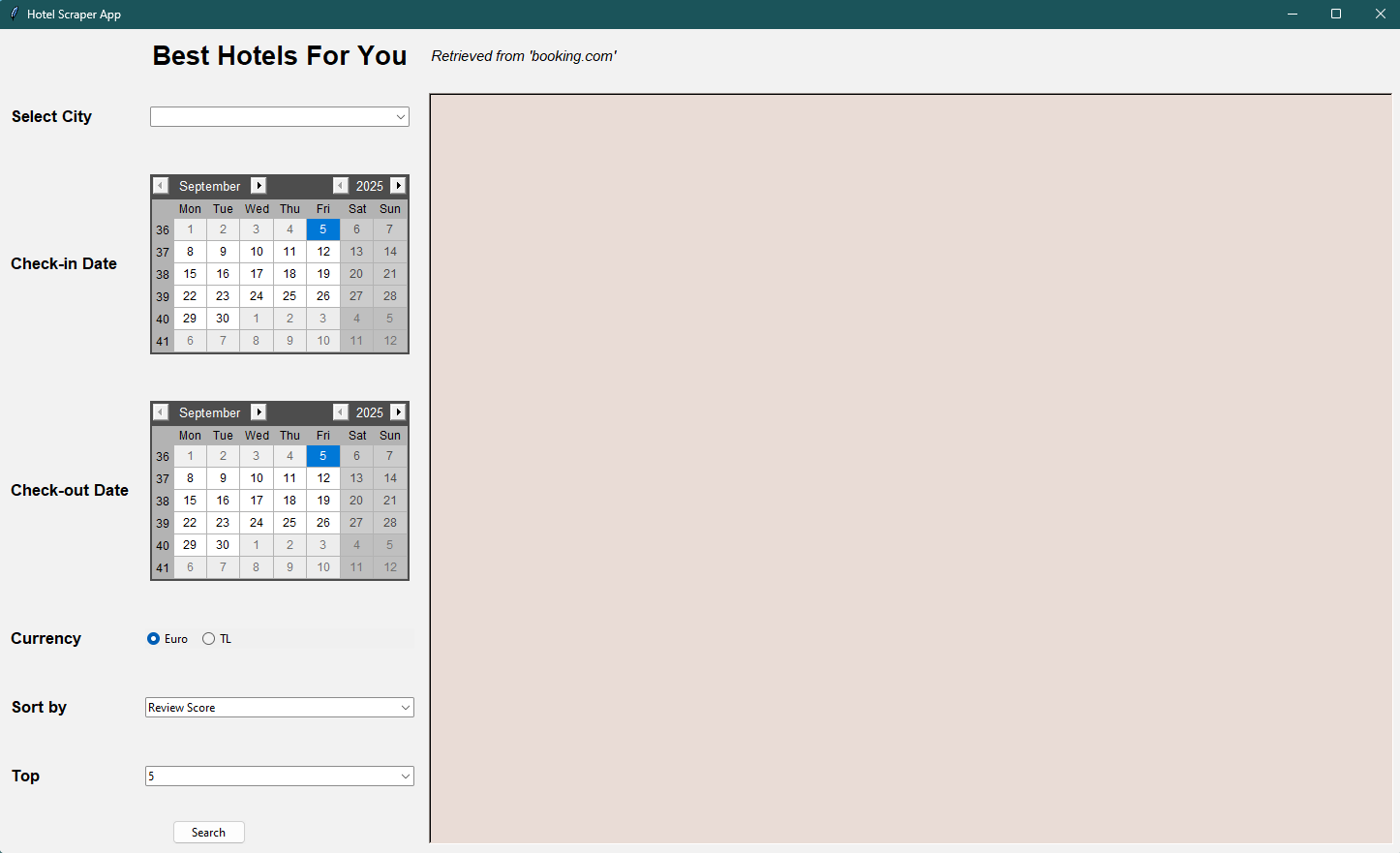
This project is a comprehensive hotel booking application designed to simplify the process of finding accommodation. Built with Python, it allows users to search for hotels by selecting the city, check-in and check-out dates, number of guests and rooms, as well as currency and sorting preferences. Using Requests and BeautifulSoup, the application scrapes hotel data from Booking.com, organizes and processes it with Pandas, and exports results to CSV. The user-friendly interface is developed with Tkinter, where search results are displayed in a visual list. Input validations ensure correct date entries with error messages for invalid ones, while correct inputs provide a list of hotels sorted by price. Combining a powerful web scraping engine with an intuitive graphical user interface, the application offers users a fast and practical way to find the best accommodation options.
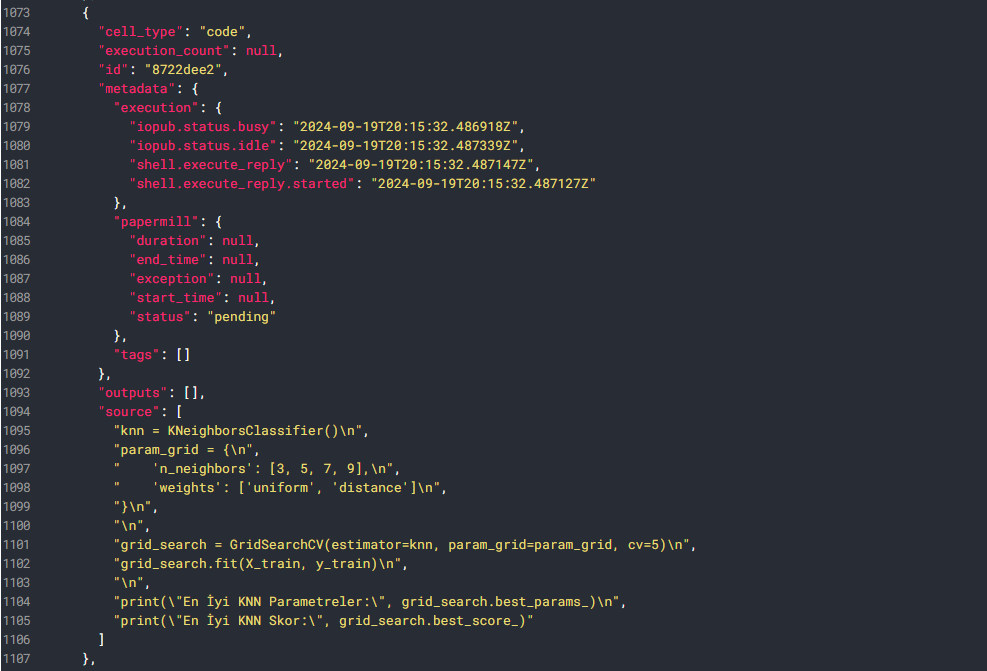
A team project completed during the Aygaz Machine Learning Bootcamp, applying both supervised and unsupervised learning techniques on the Kaggle Movie Ratings Dataset. Using Linear Regression, movie ratings were predicted and evaluated with MSE, MAE, and R² score. For unsupervised learning, K-means clustering was applied to group users and movies, and the results were visualized. Additionally, a KNN classifier was optimized with Grid Search and evaluated using accuracy, precision, recall, F1 score, and a confusion matrix. The project was implemented in Python on Kaggle Notebooks.
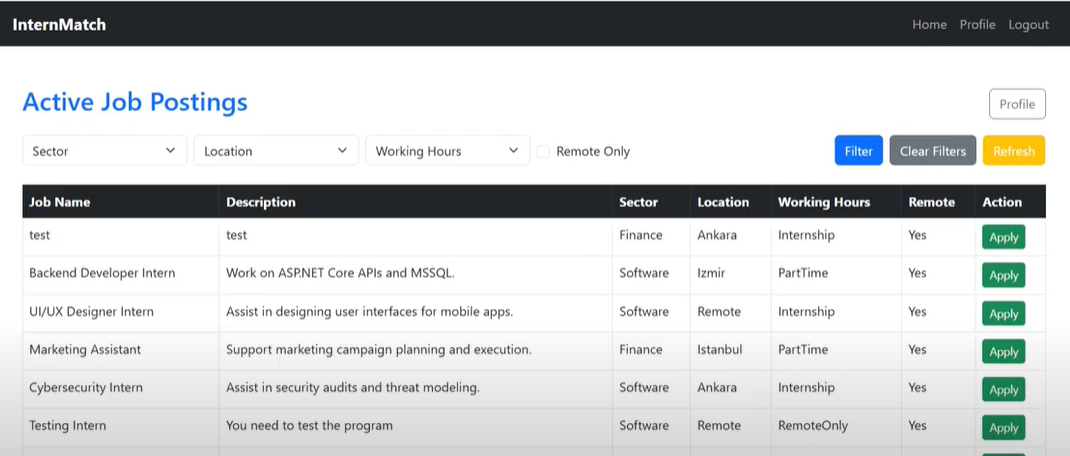
This project is a team project developed for the SE410 Software Framework Applications course using C# .NET and the MVC architecture. It is designed as a job and internship portal where the Admin and Employer modules are built as a desktop application, while the Student module is implemented as a web application. Admins can monitor postings and generate reports, employers can manage job postings and applications, and students can create profiles, apply for jobs, track applications, and receive recommendations. The system also includes filtering, job matching, and notification features, offering a practical and user-friendly platform.
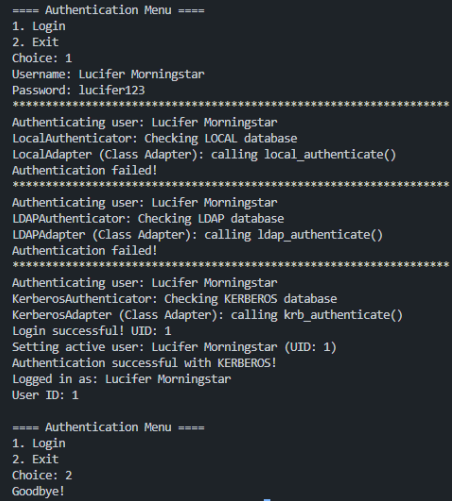
A team console project for the SE311 Software Architecture course, built in Java, that simulates LOCAL, LDAP, and KERBEROS authentication. The system applies multiple design patterns, including Abstract Factory, Adapter, Template, Singleton, Iterator, and Facade, to create a modular and extensible authentication mechanism.
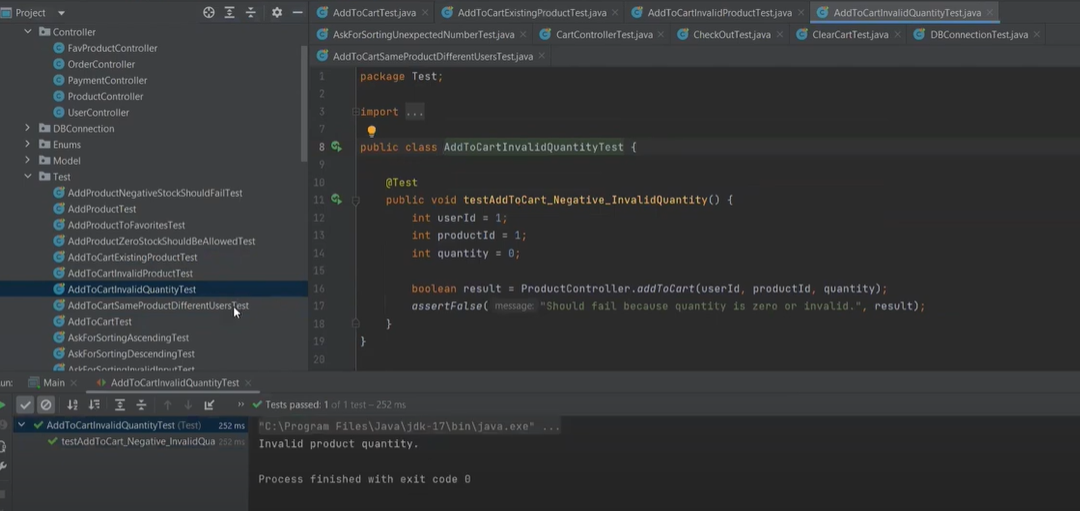
A team project for the SE322 Software Testing course, developed as a Java-based e-commerce console application. The main focus of the project was to apply unit testing with JUnit, performing both positive and negative test cases to ensure system reliability and correctness.
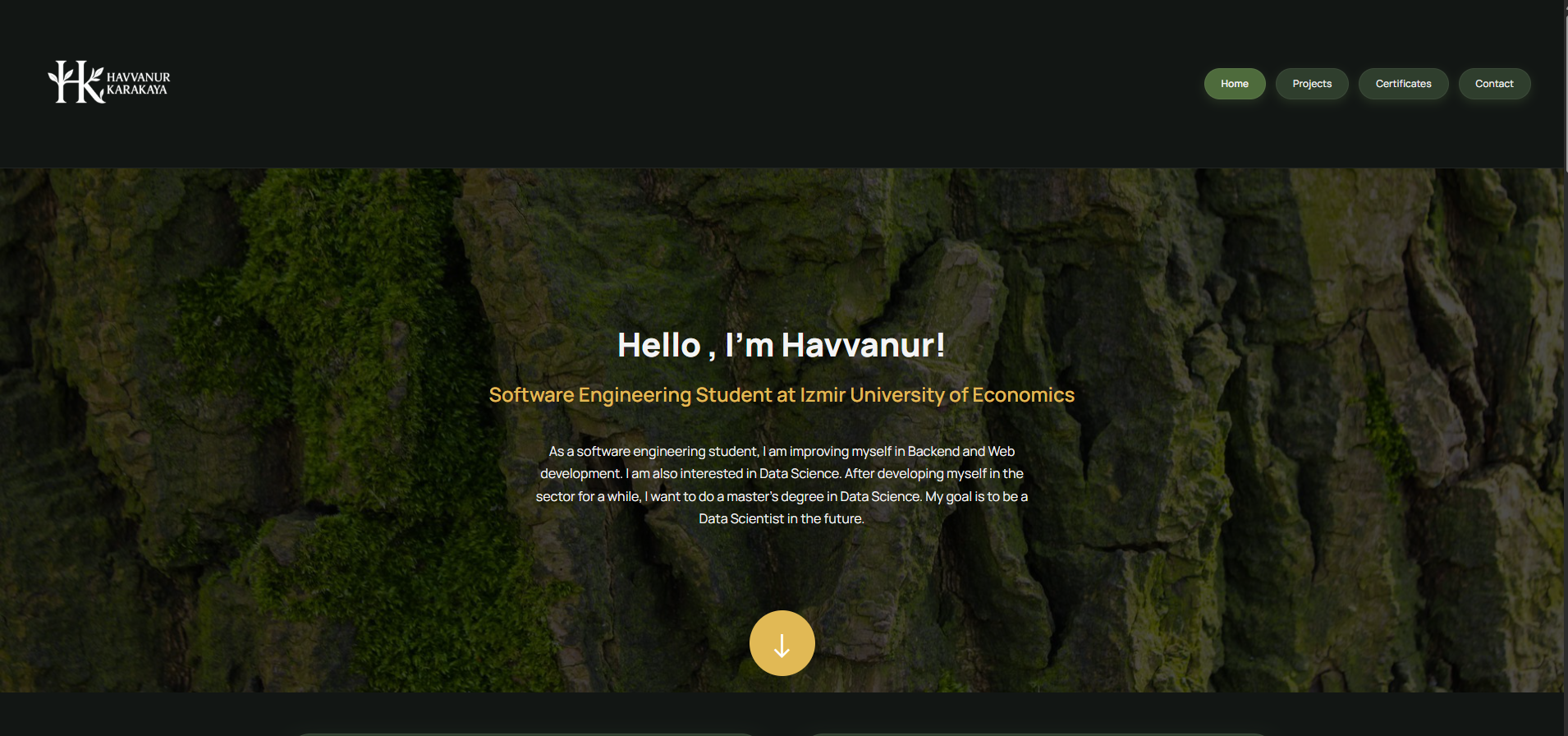
Designed and developed a responsive portfolio website using HTML, CSS, JavaScript, and PHP. Showcases projects, certificates, and skills with an interactive UI, gallery components, and a functional contact form.
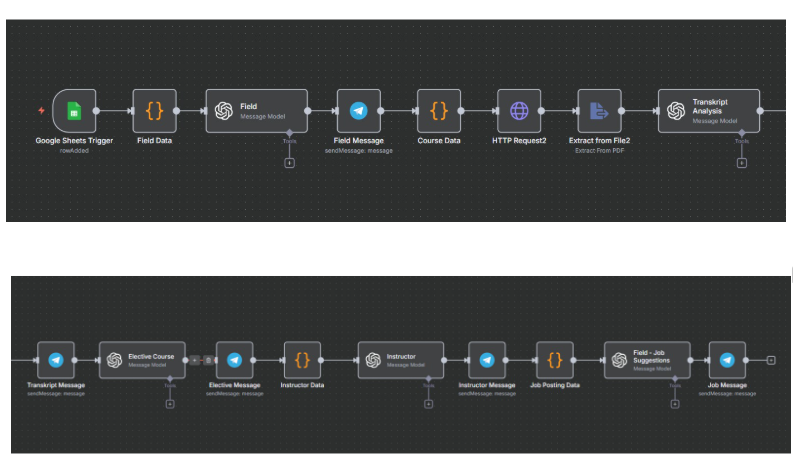
Developed within the scope of FENG 497 Multidisciplinary Engineering Projects in collaboration with peers from Electrical & Electronics Engineering and Industrial Engineering. An AI-based career guidance chatbot for Izmir University of Economics students, powered by OpenAI's LLM and n8n automation, accessible via Telegram. The system analyzes academic transcripts, career test results, and real-time job postings to deliver personalized recommendations for sub-disciplines, elective courses, and skill development.
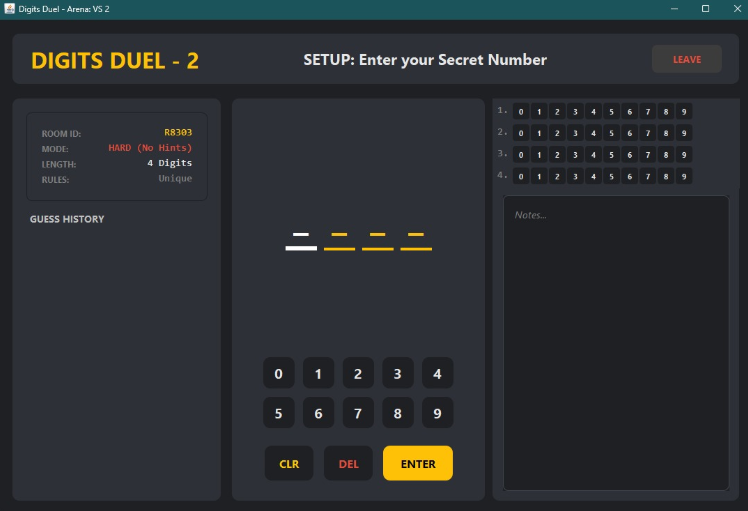
Developed within the scope of SE 360 Software Development Improvement course to reinforce advanced Java concepts. Digits Duel is a real-time, turn-based strategy game based on the "Bulls and Cows" concept, built with Java networking technologies. Two players connect over a network and compete to guess each other's secret number. The game offers 2 difficulty levels (Bulls & Cows with positional hints, or Without Hint), 3 number length options (4, 5, or 6 digits), and additional settings such as unique digits and numbers starting with zero.
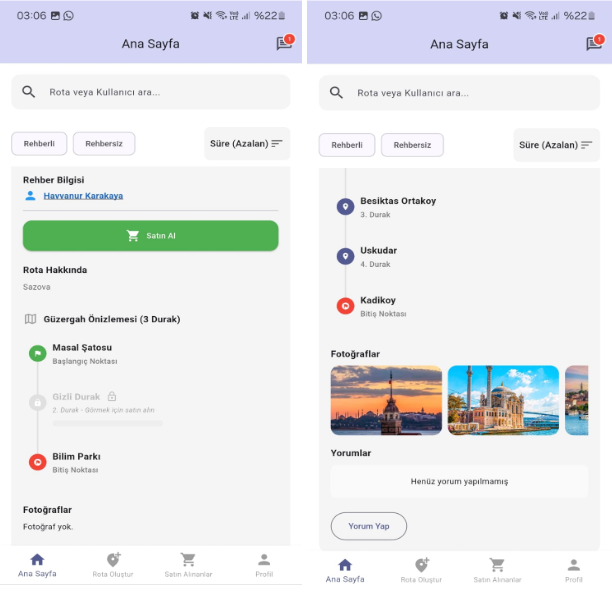
Developed within the scope of SE 380 Mobile Application Development course as a team of 3. Rotacı Gençlik connects travelers with local guides by allowing users to create and sell travel routes, purchase existing ones, and explore destinations through Street View integration. Built with Flutter and Dart, the app uses Firebase for data storage and integrates Google Maps APIs including Street View Static API, Google Directions API, and Maps 3D SDK. Future plans include sponsorship and collaboration features for local businesses.
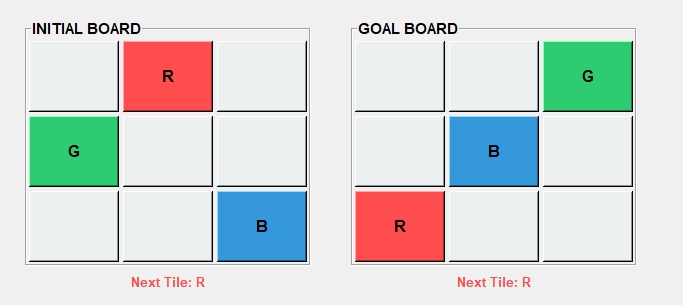
Developed within the scope of SE 420 Artificial Intelligence and Expert Systems course. A Python-based interactive application that solves a 3x3 sliding tile puzzle using the A* search algorithm with Hamming distance as the heuristic function. Users define the initial and goal board states through a tkinter GUI, where three colored tiles (R, G, B) move in a fixed order across the board. The algorithm evaluates all possible moves and selects the optimal path, notifying the user if no solution is found within 10 steps.
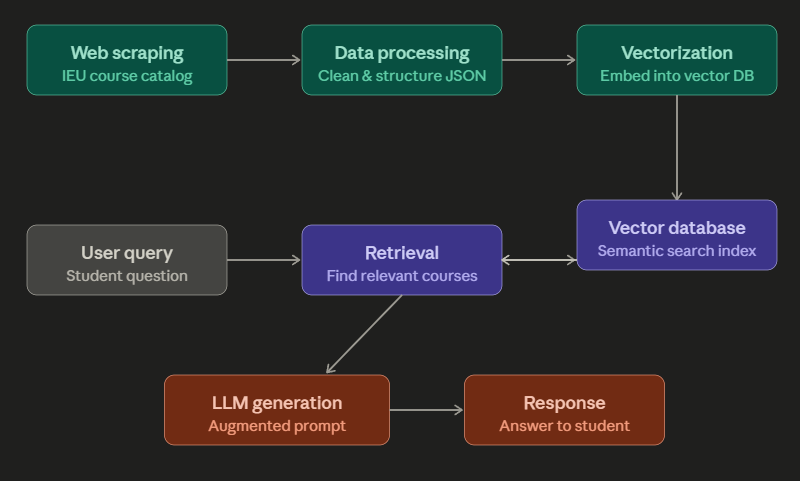
Developed within the scope of SE 420 Artificial Intelligence and Expert Systems course. A Retrieval-Augmented Generation (RAG) based chatbot that answers questions about Izmir University of Economics course catalog. The system scrapes course data from the university website, processes and vectorizes it into a local database, and uses semantic search to retrieve relevant information before generating accurate responses. Built entirely in Python with a modular architecture covering data collection, vectorization, retrieval, and automated testing.
Developed as a graduation project with a team of 3, GünLog is a mobile journaling application where users record daily memories through voice input. Speech is transcribed using Deepgram API and analyzed through an NLP pipeline built with Python and HuggingFace Transformers, including a custom fine-tuned emotion detection model achieving 92.91% accuracy, a Named Entity Recognition model, and GPT-4o Mini for activity extraction. The backend is deployed on Modal.com and the mobile app is built with Flutter and Firebase.
Endless Runner Puzzle Game, developed using Unity, C#, and Aseprite as a Game Development course project by a team of 2. A 2D pixel art endless runner where players strategically place blocks such as bridges, ladders, and platforms to help an auto-running character avoid obstacles like pits, acid, walls, spikes, and ice. Features drag-and-drop block placement, progressive difficulty scaling, and 5 unique obstacle-block mechanics. All character sprites, animations, and environmental art were created from scratch in Aseprite.
A 2D pixel art action game developed collectively as part of a game development course. The player controls a healer character who fights viruses and bacteria inside the human body, progressing through different organs (bloodstream, stomach, lungs, intestines, liver, brain) while battling enemies and repairing damaged tissues. The project was built using Aseprite for pixel art asset creation and Unity for game development.